Adults with mobility disabilities are 66% more likely to be overweight or obese than their non-disabled peers, according to research cited in this study. HIFT had shown early promise for non-disabled adults with overweight or obesity. Nobody had tested it for people who have both a mobility disability and excess weight.
A University of Kansas team ran a 24-week pilot to do that. It was published in the journal Sports in October 2025 and funded by the National Institutes of Health through the Kansas Center for Metabolism and Obesity Research.
Read Full StudyWhat the Study Asked
The primary question was feasibility: could people be recruited, would they stay, and would they attend? The secondary question was whether obesity-related measures, physical function, work capacity and psychological measures changed from baseline to 24 weeks.
Who Took Part
Twenty adults completed the study. They were 18 to 79 years old, with a mean age of 54.6, and 65% were women. Eligibility required a permanent mobility disability of at least one year, physician clearance and a self-reported body mass index between 25 and 46. Three quarters used at least one assistive device. Injury, including spinal cord injury, was the most common disability category at 35%.
How the Program Worked
Participants joined adaptive HIFT classes that were already running at four facilities in the greater Kansas City area, so the program was delivered under real-world conditions. The paper credits Bloc Life and its Adaptive Athletes in Motion program as collaborators.
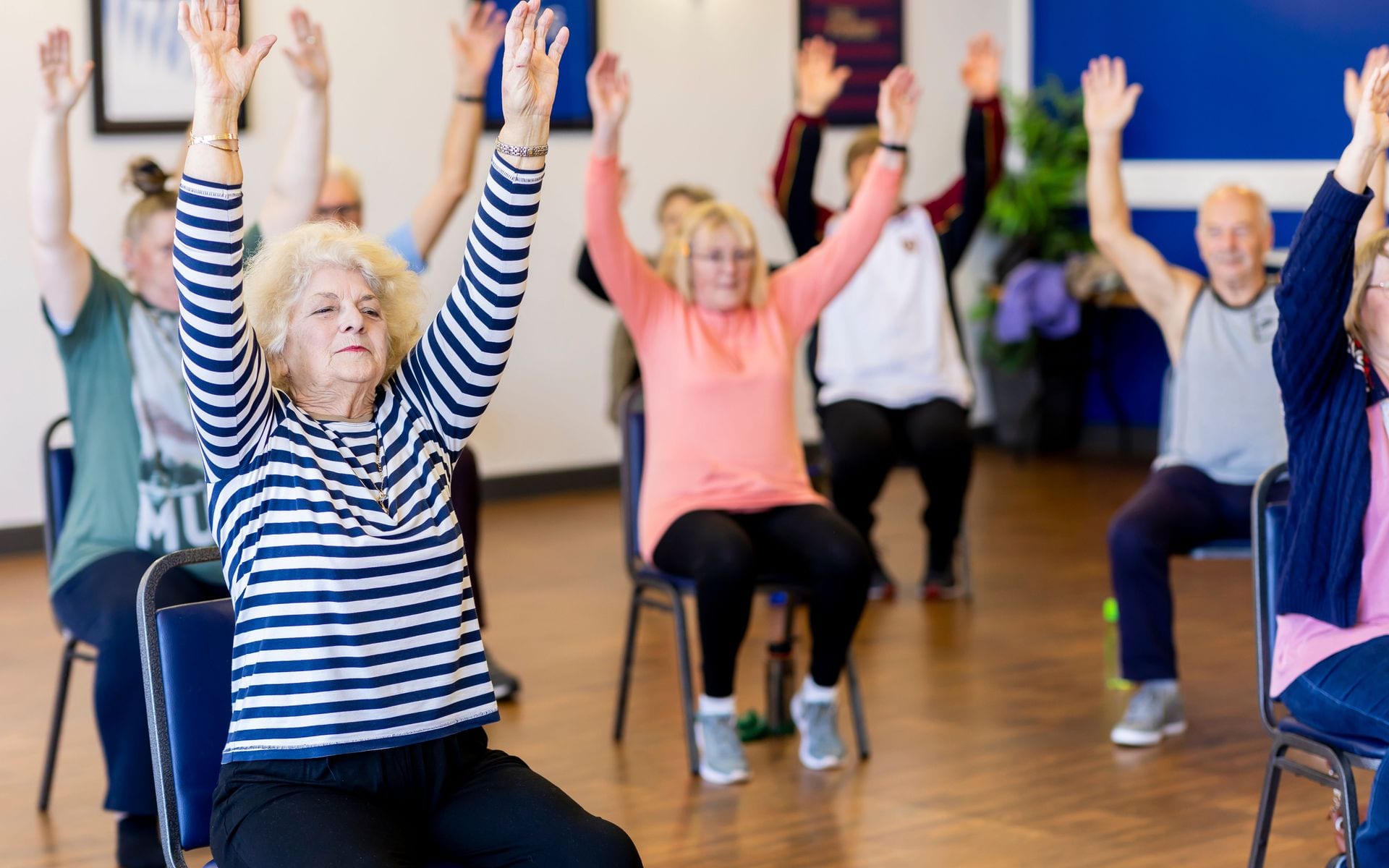
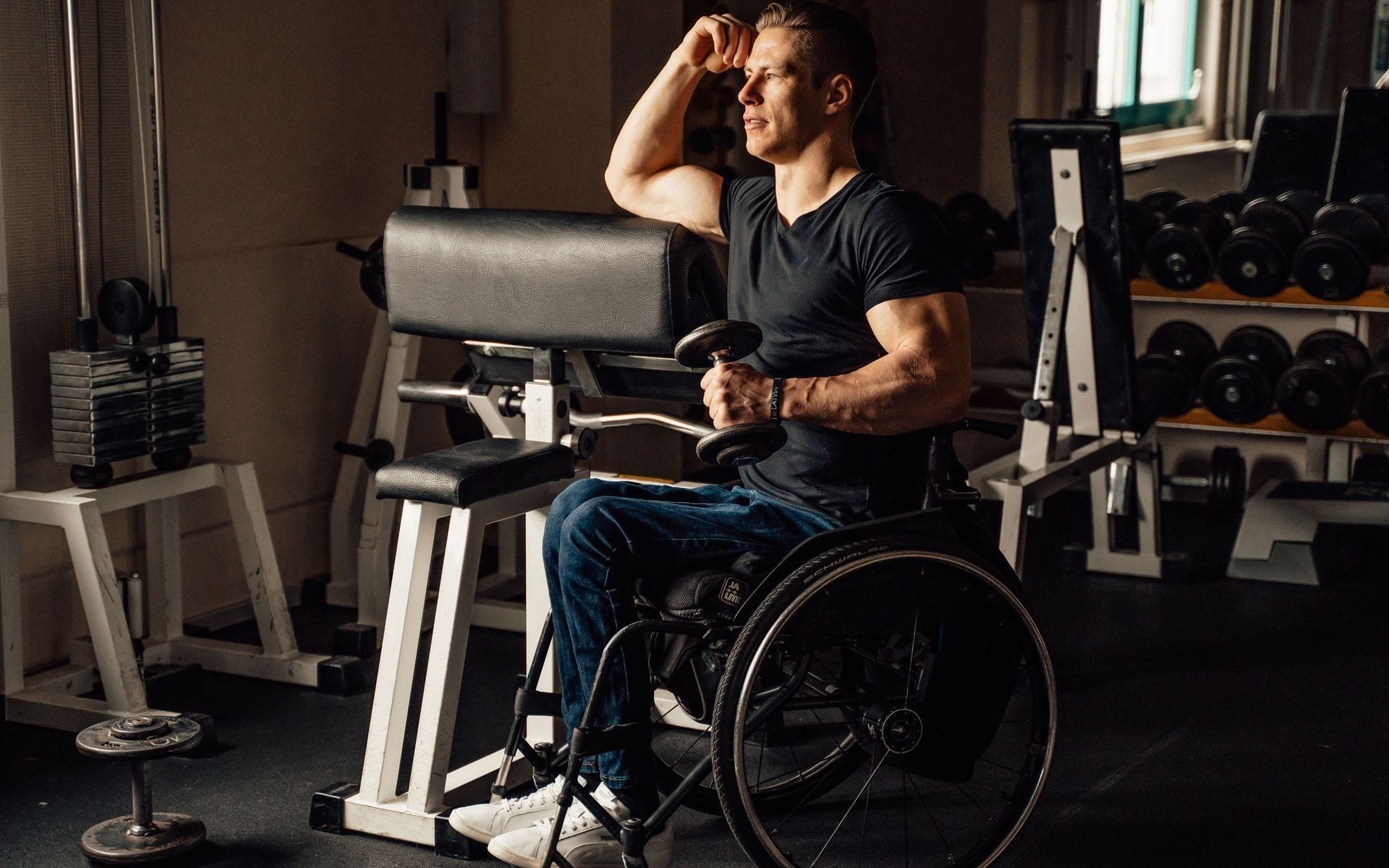
Classes lasted 60 minutes, were capped at ten people and were led by two trainers certified by the Adaptive Training Academy. Participants were asked to attend three times a week and could train at any of the four sites. Workouts were written for both standing and seated athletes. A squat, for example, became a dip for seated participants, or a seated press-down for those who could not dip. Participants set their own intensity using a perceived-exertion scale, starting light and building to moderate or vigorous effort.
Feasibility Results
Of 36 eligible people, 26 enrolled, a 72.2% recruitment rate. Twenty finished, for 76.9% retention. Attendance was 80.7%, an average of 2.42 sessions a week across 24 weeks. The authors report that feasibility targets were met.
Thirteen adverse events were recorded among eight participants. Three were considered likely related to training, such as foot pain and bicep tendonitis. Ten were unrelated, including illness, medication changes and surgical recovery. None was serious.
After the funded period ended, 68% of participants were still attending classes at eight weeks and 63% at 16 weeks, supported where needed by sliding-scale rates and scholarships from the host program.
Body Composition
Weight and body mass index did not change. Waist circumference fell by a small to moderate amount (d = −0.47): nine participants lost at least 3 cm, and five of those lost at least 5 cm. Among the 18 people with complete scans, body fat percentage decreased (d = −0.36) and lean mass percentage increased (d = 0.38). The authors note that body mass index is a less accurate indicator for people with mobility disabilities, particularly those who do not walk.
Function and Fitness
Large effects were seen for dominant-hand grip strength (d = 1.01), six-minute walk distance (d = 1.28), ten-meter walk time (d = −0.95) and 23-meter wheelchair push time (d = −1.00). Thirteen participants (68%) gained more than 5 kg of grip strength. Five of 13 ambulatory participants improved their six-minute walk by at least 88 meters, a threshold proposed for people with multiple sclerosis. All four wheelchair users pushed farther in six minutes than they had at baseline.
Seated balance showed a moderate effect (d = 0.58) and standing balance a smaller one (d = 0.32). All three work capacity tests improved, with large effects on both timed workouts (d = 1.35 and 1.39).
How Participants Rated Their Own Function
Participants named daily activities that mattered to them and rated their performance and satisfaction. Both showed large effects (d = 1.25 and 1.40). Perceived barriers to health activities fell sharply (d = −1.36). Health-related quality of life showed a small positive effect (d = 0.25).
Limits of the Study
The sample was small and set by available funding, not a power calculation. There was one group, no comparison group and no masking, so the design limits any claim about cause. Some outcomes had missing data: eight participants lacked some performance-based assessments and two did not complete scans. Long-term durability was not measured. The authors call for larger controlled trials that compare adaptive HIFT with other community exercise programs and add measures such as blood lipids, glucose and blood pressure.
Sources
Koon, L. M., Donnelly, J. E., Sherman, J. R., Rice, A. M., Clina, J. G., Thyfault, J., Handlery, R., Handlery, K., & Crawford, D. A. (2025). Feasibility and Preliminary Effects of Community-Based High-Intensity Functional Training for Adults with Mobility Disabilities and Overweight/Obesity: A Pilot Study. Sports, 13(10), 361. https://doi.org/10.3390/sports13100361
ClinicalTrials.gov. Functional Fitness for Overweight or Obese Adults With Mobility Disabilities, NCT05880966. https://clinicaltrials.gov/study/NCT05880966
The study was supported by the National Institute of General Medical Sciences of the National Institutes of Health under Award Number P20GM144269 through the Kansas Center for Metabolism and Obesity Research. The content is the responsibility of the authors and does not necessarily represent the views of the funder.