Little published evidence exists on inclusive, community-based exercise for older adults who have lived with a mobility disability for years. This pilot, published in the journal Healthcare in January 2026, tested a 16-week HIFT program for that group.
The program was delivered at four community facilities in partnership with Adaptive Athletes in Motion, the Bloc Life program that the paper describes as having provided adaptive HIFT in the greater Kansas City area for over ten years.
Read Full StudyWhat the Study Asked
Is a thrice-weekly community HIFT program feasible, safe and acceptable for adults aged 60 and older with a mobility disability? The researchers also looked at early effects on physical function, fitness and quality of life.
Who Took Part
Thirteen people enrolled and ten completed the study. They were 61 to 82 years old, with a mean age of 69.8, and 60% were women. Conditions included Parkinson's disease, stroke, traumatic injury and spinal stenosis. Participants had lived with a mobility disability for 16.5 years on average, ranging from 3.8 to 67.1 years. Half used an assistive device at least some of the time. All could walk short distances, which the testing required.
How the Program Worked
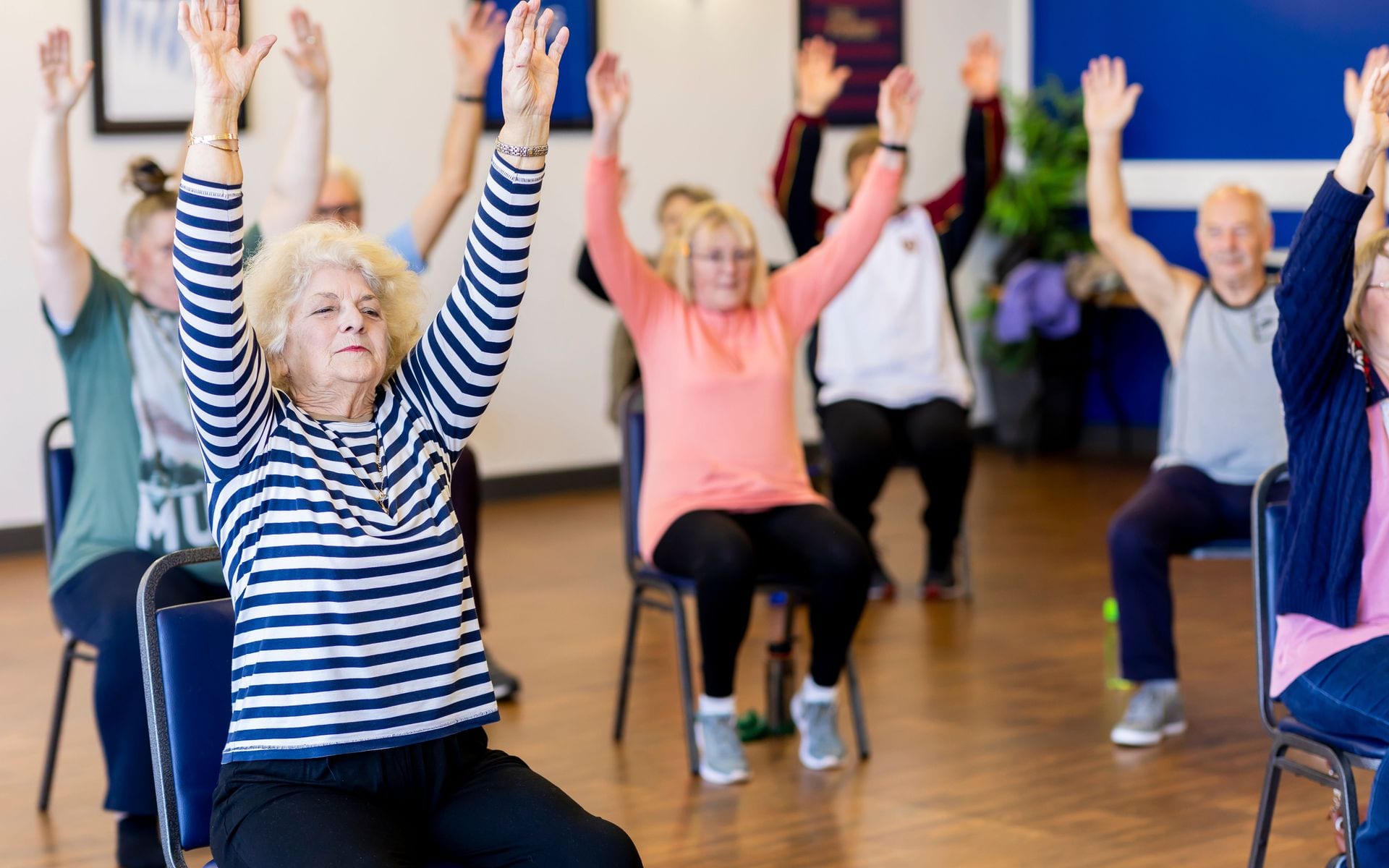
Each facility offered four group sessions a week, and participants were asked to attend three. Everyone completed two individual onboarding sessions first. Trainers held CrossFit Level 1 or higher plus an Adaptive and Inclusive Training certification, and lead trainers had at least two years of adaptive coaching experience. Classes kept five participants to each trainer, with trained student volunteers assisting.
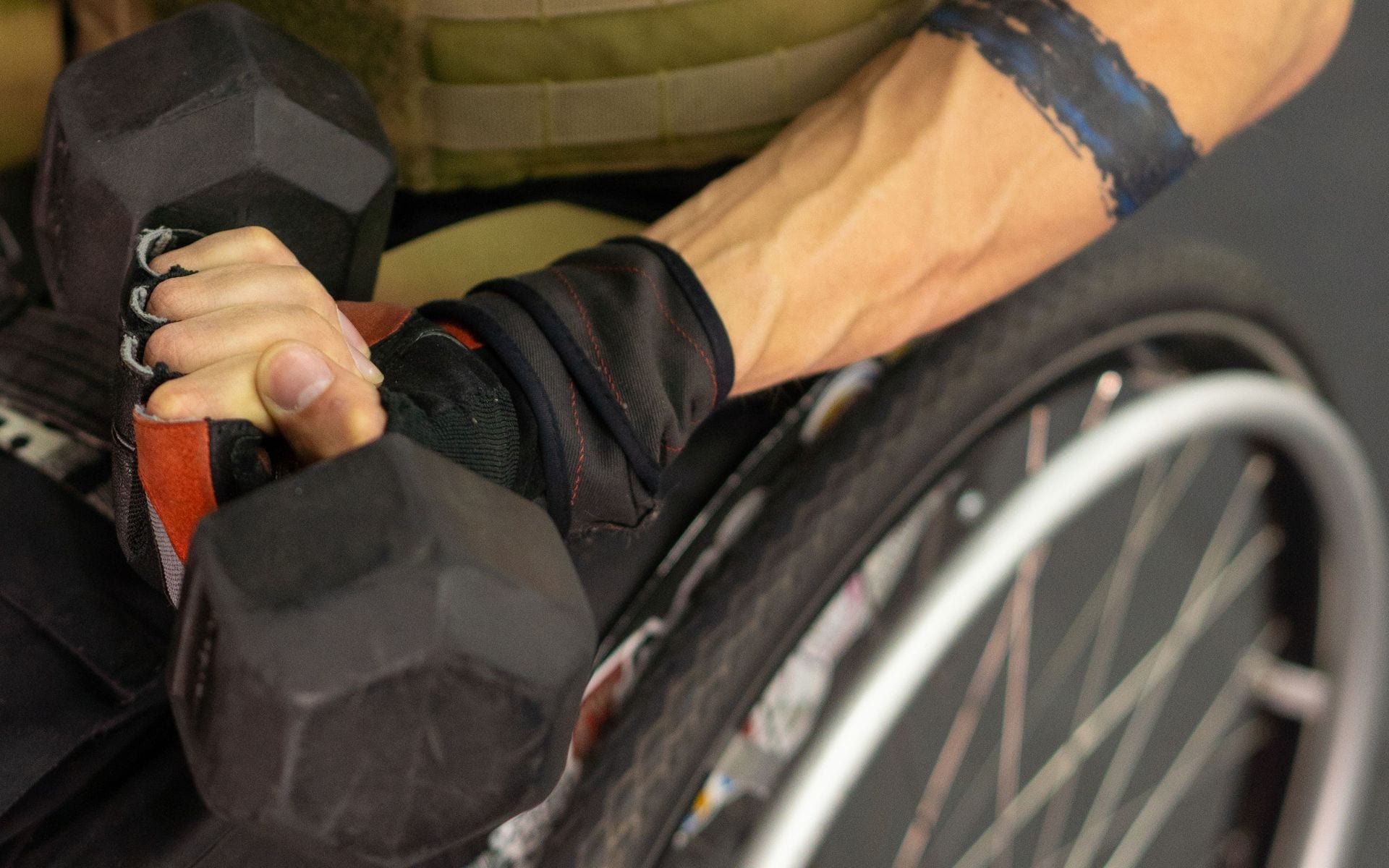
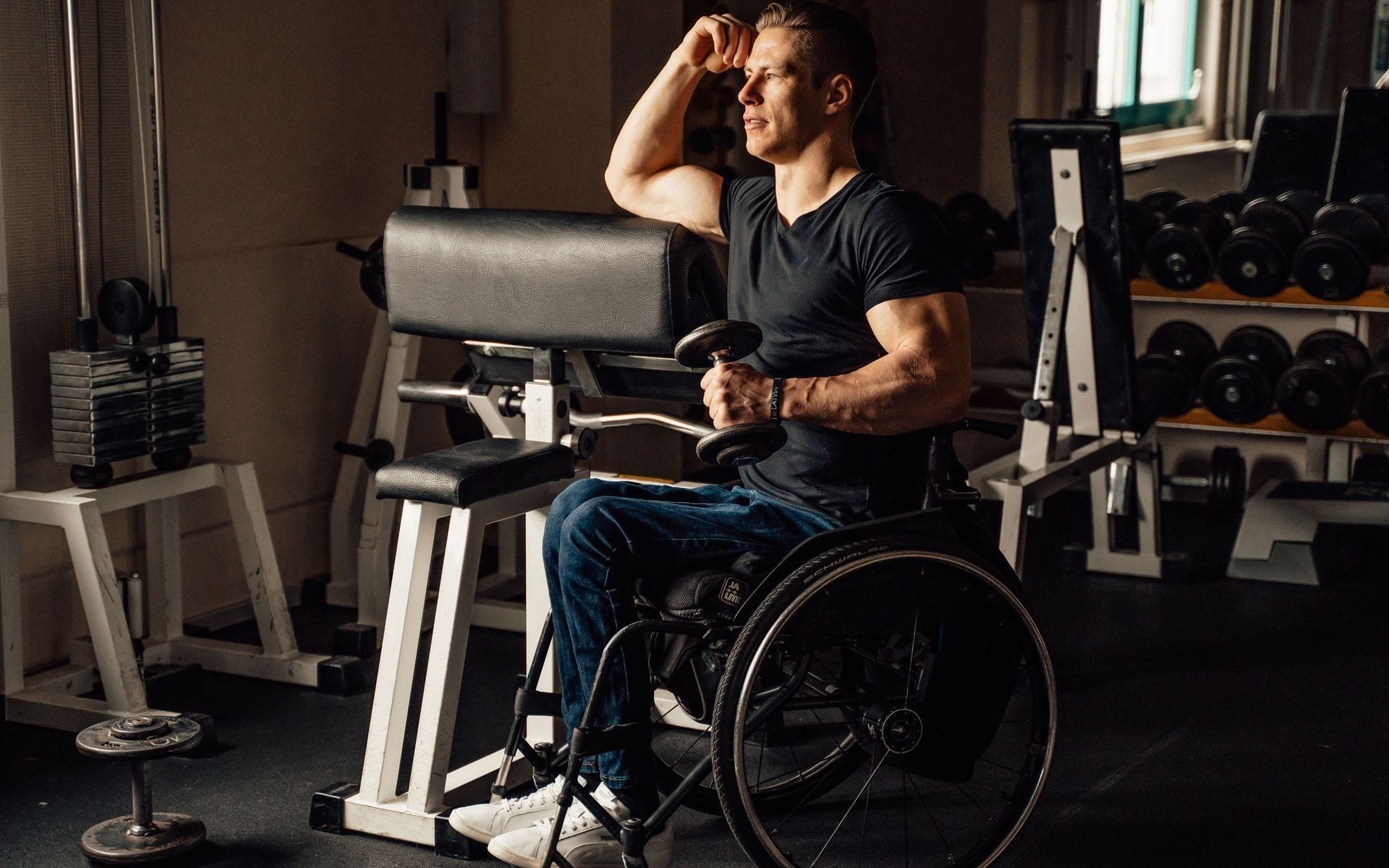
Common movements were squats, push-ups, overhead presses, deadlifts, rowing, biking and skiing. Adaptations included seated or box-supported squats, wall push-ups, single-arm or banded presses, and deadlifts from blocks. Across 298 recorded sessions, participants rated their effort at 6.2 out of 10 on average, which is moderate to vigorous.
Feasibility Results
Thirty-four people completed the interest survey and 13 enrolled, a 38% recruitment rate. Ten finished, for 77% retention. Attendance within the 16 weeks was 58%. When participants were allowed to make up missed sessions through week 20, it rose to 80%. They averaged 2.4 sessions a week.
Against the preset thresholds, retention came close, while recruitment and in-window attendance fell short. The authors suggest that three sessions a week may be more than some older adults aging with mobility disabilities can manage, and that strict eligibility rules limited recruitment.
One participant fell while moving from a bench to standing, was injured, missed about four weeks and withdrew at week eight. Two other adverse events were unrelated to the program.
What Improved
Participants named the daily activities that mattered most to them, from getting dressed and climbing stairs to gardening and playing the drums. Their ratings showed large effects for performance (d = 1.03) and satisfaction (d = 1.54). Confidence in doing daily activities without falling also rose (d = 0.97).
Endurance improved: participants completed 10.6 more steps on the two-minute step test (d = 1.01). All three work capacity tests improved, with participants rowing 250 meters 13.8 seconds faster on average. Balance scores rose 2.3 points on the Berg Balance Scale (d = 0.55).
What Held Steady
Results on standard mobility and strength tests were mixed. Participants were slightly slower on the ten-meter walk, the timed up and go barely changed, and the sit-to-stand test showed a small effect. A standardized self-report of physical function showed a small effect (d = 0.36). Body mass index and waist circumference did not change. Quality of life improved slightly (d = 0.20).
The authors note that participants started with relatively high mobility scores, which can produce ceiling effects. They also point out that holding balance steady may itself be a good outcome, given the decline expected with age.
What Participants Said
Exit interviews described the program as well tailored to each person. “They knew everybody’s limitations and fixed things right away, so I didn’t hurt myself,” one participant said. Another said, “It feels really good to be with people who understand what [having a disability is] like.” Barriers to attendance were mostly logistical: illness, weather, transportation, and work or caregiving.
Because the program ran inside an existing community gym network, people could continue afterward. Sixty percent were still attending four weeks later and 50% at 16 weeks.
Limits of the Study
The authors describe this as a single-group pilot with a small sample that was not designed to show cause. They say the effect sizes should be read with caution and treated as preliminary. Participants had to be ambulatory and were likely a motivated group, which limits how far the findings apply. Interview data were coded by the lead investigator alone. Falls themselves were not counted, only confidence about falling.
Sources
Koon, L. M., Donnelly, J. E., Sosnoff, J. J., Tabatabaei, A., Sherman, J. R., Rice, A. M., Means, M., Handlery, R., & Handlery, K. (2026). High-Intensity Functional Training for Older Adults with Mobility Disabilities: A Feasibility Pilot Study. Healthcare, 14(3), 349. https://doi.org/10.3390/healthcare14030349
ClinicalTrials.gov, NCT07283510. https://clinicaltrials.gov/study/NCT07283510
The study was funded by the Landon Center on Aging Pilot Projects, University of Kansas Medical Center. The authors acknowledge Adaptive Athletes in Motion, a program of Bloc Life, Inc., and the Adaptive Training Academy for their collaboration.